
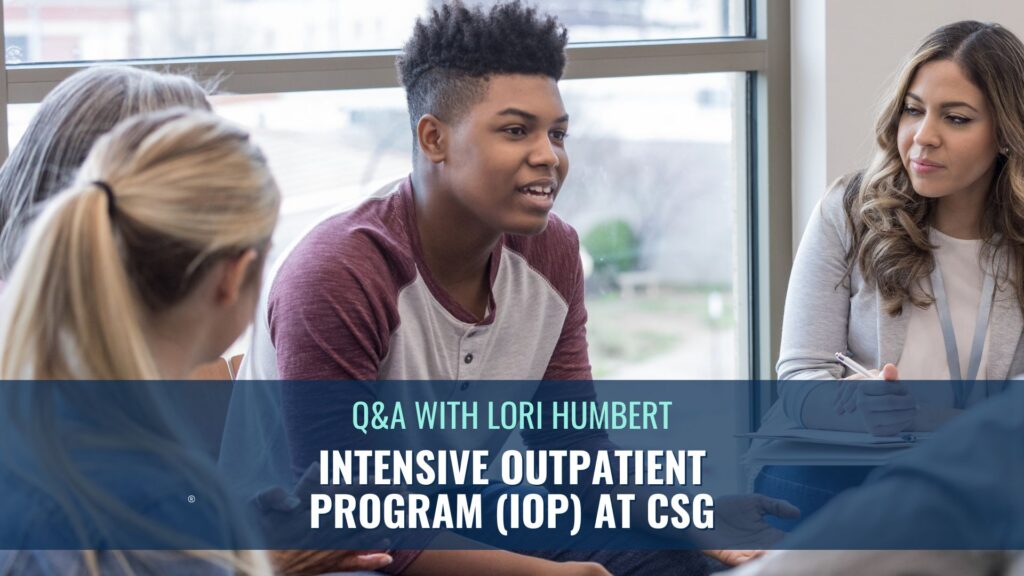
You may have heard the term Intensive Outpatient Program (IOP) from a therapist, physician, school counselor, or even a friend or family member. That’s because IOPs are becoming a more common treatment option across mental health care. Providers are recognizing that many people need more support than once-a-week therapy without the disruption of hospitalization.
Intensive Outpatient programs fill that gap by offering structured, consistent treatment while individuals continue living at home, working, attending school, and staying connected to their everyday lives.
Many people hear the word intensive and immediately think hospitalization, or they assume things have become “severe.” In reality, an IOP is often the exact opposite: it’s a structured level of support designed to help people stay in their daily lives while getting the care they need to feel stable again.
At CSG we recently transitioned our Harrisburg Partial Hospitalization program to an Intensive Outpatient Program (IOP) to better meet the needs we are seeing in our communities. These are especially beneficial for individuals who need more support than weekly therapy, but do not need a full day Partial Hospitalization program or inpatient services. In other areas, we provide both Partial Hospitalization and Intensive Outpatient programs.
If you’d like to learn more about what IOP is and if it may be a treatment option for you or someone you care about, check out this Q&A with Lori Humbert, our Director of Partial Hospital and DBT Programs, who is answering some of our most frequently asked questions.
Lori:
An IOP is a structured mental health treatment program where individuals attend group therapy, typically 3 times per week while continuing to live at home and maintain their daily responsibilities. Individuals attending IOP can also receive individual therapy and medication management as part of the service.
It provides more support than traditional outpatient therapy but does not require overnight stays or hospitalization.
Think of it as a middle ground:
The goal is to help individuals stabilize symptoms, learn coping skills, and regain confidence in everyday life.
Lori:
IOP may be a good fit for adults who:
It is especially helpful for people who know they need more help — but still want to remain in their community and daily routines.
Lori:
Most IOP programs meet multiple days per week for several hours each day. This consistency allows individuals to work on skills in real time and help build routine and accountability. It also helps individuals practice what they learn between sessions.
Lori:
IOP participants take part in structured, therapist-led groups that teach practical skills, such as:
IOP programs also offer individual sessions and medication support.
The focus is helping people function better, through processing emotions and stressors, gaining support from others and developing skills. IOP programs are designed to help you attain your self identified goals on the road to recovery.
Lori:
No. In fact, one of the biggest benefits of IOP is preventing a crisis.
Many people attend because they recognize early warning signs. This includes things such as:
Getting structured help early often shortens recovery time and prevents hospitalization.
Lori:
In some cases, yes you can continue to see your current therapist or prescriber. Depending on your needs and insurance plan, you may continue with your existing providers, or choose to see a CSG clinician or psychiatric provider
The goal is coordinated support. Talk to our clinicians about what is right for you.
Lori:
This is one of the most common worries.
You are never forced to share more than you are comfortable with. Many people actually find group therapy helpful because others understand what they’re going through. It often make them feel less alone and allows them to learn from shared experiences.
Participation grows naturally over time.
Lori:
Length of treatment varies based on individual needs, but IOP is designed to be short-term and goal-focused. As symptoms improve, individuals transition to less frequent outpatient care.
The goal is not to keep you in treatment — it’s to help you feel well enough that you don’t need intensive support anymore.
Lori:
You might consider talking to someone about IOP if:
You don’t have to wait until things get unmanageable to seek help.
Lori:
The first step is simple: reach out.
You, a family member, a therapist, a physician, or another provider can make a referral. CSG will help determine whether IOP is the right level of care and guide you through next steps.
You don’t need to know exactly what you need before calling — that’s what we’re here to help with.
Many people feel unsure about seeking more support. But needing help doesn’t mean you’ve failed, it means you’re paying attention to your wellbeing.
IOP exists so people can get the right help at the right time, while continuing to live their lives, stay connected to their communities, and move forward with confidence.
If you’re struggling, or if you’re a provider looking for a trusted referral partner, CSG is here to help. Contact us today.